Cannabis Seizures in Mpumalanga and Limpopo Lay Bare the Gap Between Policing and Reform
Two enforcement operations, conducted within 24 hours of each other, have resulted in the confiscation of over R158 000 worth of cannabis and the arrest of five people. One played out on the N2 highway near Mahamba in Mpumalanga; the other in a Polokwane park. Both were reported by The Citizen. Together, they put a sharp light on a tension that South African cannabis policy has been sitting with for years: private use was partially decriminalised after the Constitutional Court's landmark 2018 ruling in Prince v Minister of Justice, yet the commercial supply chain remains almost entirely criminalised. The result is that law enforcement continues to aggressively pursue trafficking networks that a properly regulated market might otherwise bring above ground.
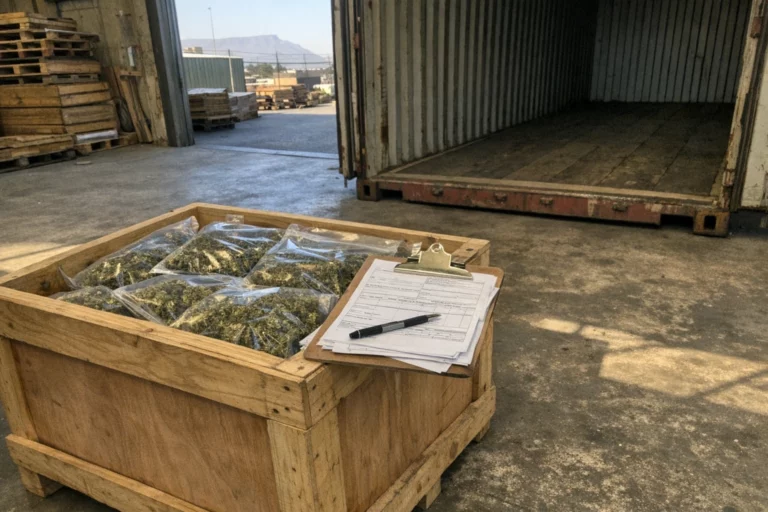
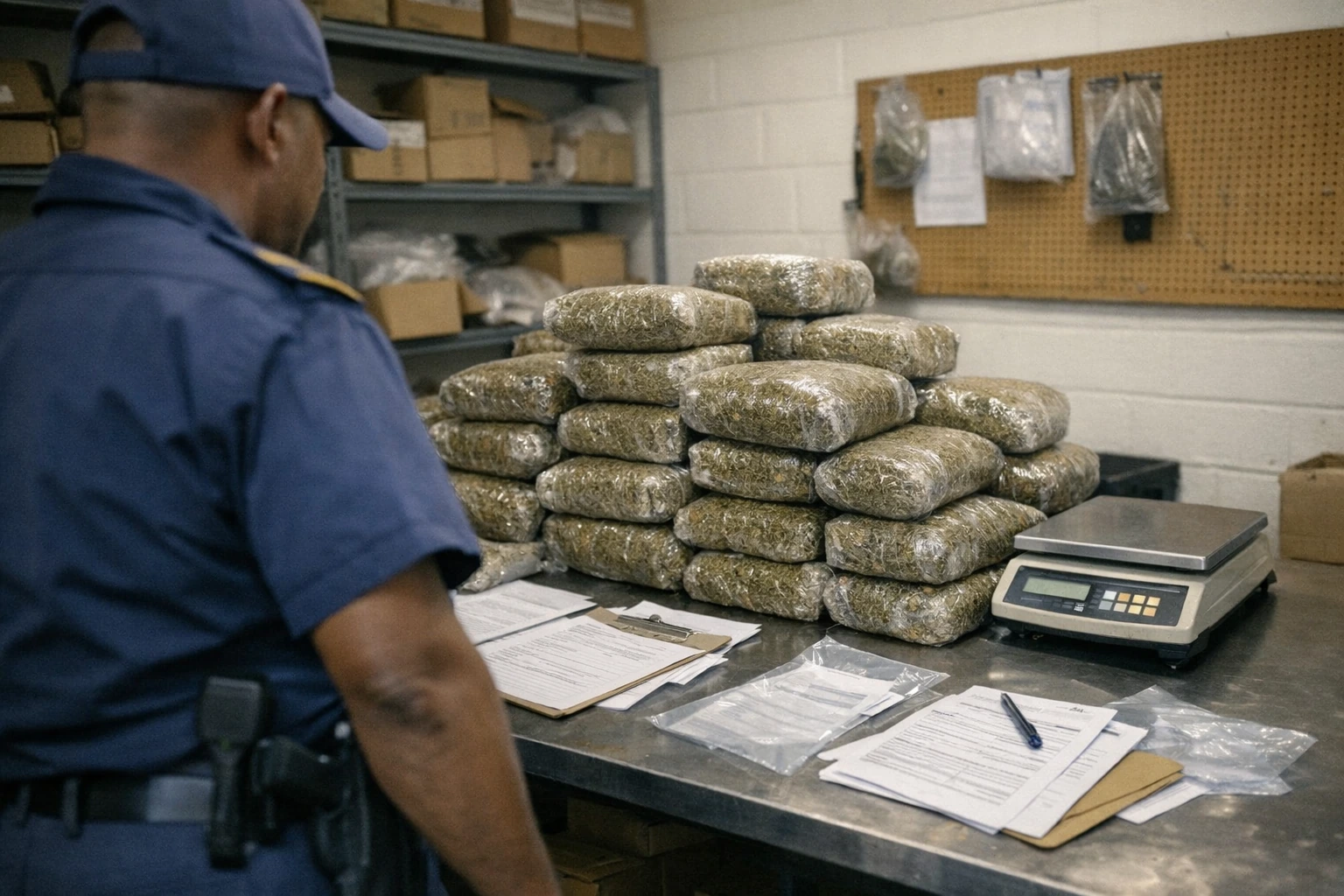
The first and larger of the two incidents happened on the evening of Wednesday, 20 May 2026, when members of the South African Police Service stopped a white Toyota Venture travelling towards Newcastle along the N2 near a farm in Mahamba, Mpumalanga. The Citizen reported the stop was part of routine crime-prevention duties conducted at around 22:15. Officers searched the vehicle and found 15 rolls of cannabis plants weighing 25.5 kg, with an estimated street value of over R15 000. Five suspects, aged between 30 and 34, were arrested on the spot and charged with possession and dealing in cannabis. All five were expected to appear before the Piet Retief Magistrate's Court on Friday, 22 May 2026. Mahamba SAPS confirmed that police "remain committed to intensifying operations aimed at combating drug trafficking and criminal activities within the Mahamba policing area."
The second operation, also reported by The Citizen, took place on the morning of Thursday, 21 May 2026, and unfolded rather differently in Polokwane, Limpopo. Acting on a tip-off from community residents who alleged that a male suspect was selling cannabis at the corner of Viljoen and General Maritz Streets, the Provincial Community Policing Forum Board Chairperson, Frans Kgasago, coordinated with a member of the SAPS Organised Crime Unit to investigate. The joint team tracked down a suspect at a nearby park in the Bendor suburb. He noticed the officers, though, and fled on foot, evading arrest. Despite that escape, approximately R5 000 worth of cannabis plants was recovered from the scene. Investigations to trace the suspect are ongoing. Limpopo Provincial Commissioner Lieutenant General Thembi Hadebe praised the CPF-SAPS partnership as "a vital tool in the fight against drug dealing," and encouraged communities to maintain close cooperation with police.
Taken together, the two operations illustrate the continued, resource-intensive effort South African police are deploying against cannabis distribution. Critics of current policy argue that effort is misplaced, given where legal reform is clearly headed. The Constitutional Court's 2018 ruling in Minister of Justice and Constitutional Development v Prince found that prohibiting the private use, possession, and cultivation of cannabis by adults in private spaces was unconstitutional. Parliament subsequently passed the Cannabis for Private Purposes Act, signed into law by President Cyril Ramaphosa in 2024, which formally decriminalised personal adult use. What the Act does not do, however, is create any legal framework for commercial sale, licensed retail, or a regulated supply chain. That legislative vacuum is precisely where operations like these two sit.
The South African Health Products Regulatory Authority (SAHPRA) does regulate certain cannabis-derived pharmaceutical products, and a separate licensing framework exists for hemp cultivation and for medicinal cannabis destined for export markets. South Africa has emerged as a meaningful player in the global medicinal cannabis supply chain, with companies such as Cilo Cybin and Highlands Grow holding SAHPRA licences for cultivation and processing. But for the vast majority of domestic cannabis that changes hands, including the consignments seized this week, no lawful commercial pathway yet exists. Proposals for a domestic adult-use retail market have been debated in Parliament and within the Department of Agriculture, Land Reform and Rural Development, but no draft licensing Bill had been tabled at the time of these arrests. That is, to put it plainly, a long time to leave a gap this large unfilled.
The regulatory vacuum creates predictable outcomes. With no legal wholesale or retail market, cannabis grown domestically, including significant quantities from traditional producing regions such as the Eastern Cape's Pondoland and KwaZulu-Natal's midlands, enters distribution networks that are, by definition, criminalised. Seizures along routes like the N2 corridor between KwaZulu-Natal and Mpumalanga are a regular feature of SAPS enforcement reporting. The vehicle intercepted near Mahamba carried KwaZulu-Natal registration plates, consistent with that known trafficking corridor. Analysts and advocacy organisations have long argued this pattern will persist until a regulated commercial market displaces the informal one. Nothing about these two incidents suggests that argument is losing steam.
The community tip-off element of the Polokwane incident deserves separate attention. Lieutenant General Hadebe's endorsement of CPF-SAPS collaboration reflects a policing philosophy that places community intelligence at the centre of drug enforcement. That model has genuine value when it comes to hard-drug distribution and organised crime. Its application to cannabis, though, a substance adults may now legally possess and cultivate for private use, raises real questions about how front-line officers and community members understand the current legal framework. The line between lawful personal possession and unlawful dealing is not always clear to the public, and the Cannabis for Private Purposes Act has not been accompanied by the kind of broad public education campaign that would help communities, CPF members, and officers make that distinction confidently. Without that clarity, well-intentioned tip-offs can easily blur into enforcement of conduct that is no longer, strictly speaking, criminal.
What observers and industry stakeholders should watch in the coming months is whether the parliamentary process around commercial cannabis regulation picks up pace. The ANC's 2024 election manifesto included commitments to developing a domestic cannabis economy, and the Department of Agriculture has received submissions from small-scale farmers, many of them from historically marginalised rural communities, who want to participate in a legalised market. Until that framework is in place, scenes like those on the N2 near Mahamba and in a Polokwane park will keep repeating: police will seize, courts will process, and the underlying supply dynamic will remain exactly as it is now.
About the Author