US Veterans' Cannabis Reform Puts South Africa's Military Medical Access Gap in the Spotlight
A bipartisan push in the United States Congress to let military veterans receive medical cannabis recommendations through federal government doctors has renewed scrutiny of how countries treat their former soldiers' access to cannabis-based medicines, and it raises pointed questions about where South Africa's own veterans stand under the country's still-evolving regulatory framework.
According to Marijuana Moment, Republican and Democratic lawmakers have filed an amendment to the Military Construction, Veterans Affairs, and Related Agencies Appropriations Act that would prevent the Department of Veterans Affairs (VA) from enforcing a longstanding internal directive, Veterans Health Directive 1315, which explicitly prohibits VA doctors from completing registration forms or recommending veterans for state-approved medical cannabis programmes. The amendment is sponsored by Reps. Brian Mast, Dave Joyce, and Dina Titus, who co-chair the Congressional Cannabis Caucus. If adopted, VA physicians would for the first time be able to assist patients in formally accessing legal cannabis, something they can currently discuss but not facilitate, forcing veterans to pay for separate private consultations entirely outside the federal health system.
The practical consequence of the existing prohibition is not trivial. As Marijuana Moment notes, veterans who want legal cannabis access must seek outside providers, often at considerable personal expense, despite already being enrolled in a taxpayer-funded healthcare system whose doctors know their medical histories. The amendment would not legalise cannabis at the federal level, nor would it override state law. It would simply stop federal funds from being used to enforce the internal gag on VA clinicians. Similar measures have cleared both the House of Representatives and the Senate in previous legislative cycles but have never made it into final law. It is a pattern Mast described to Marijuana Moment last year as "ridiculous" and "detrimental to veterans," and, honestly, it is hard to argue with that.
The timing of the amendment is notable. The Trump administration recently completed the rescheduling of cannabis under federal law, moving it from Schedule I to Schedule III under the Controlled Substances Act, a shift that advocates hope creates political space for veteran-focused reforms to finally succeed where earlier attempts stalled. At the same time, the legislative picture in Washington remains deeply contradictory. A House Appropriations subcommittee voted last week to block further rescheduling steps, while the full House passed a Farm Bill with hemp provisions but without protecting hemp-derived THC products from a looming federal recriminalisation deadline, according to Marijuana Moment.
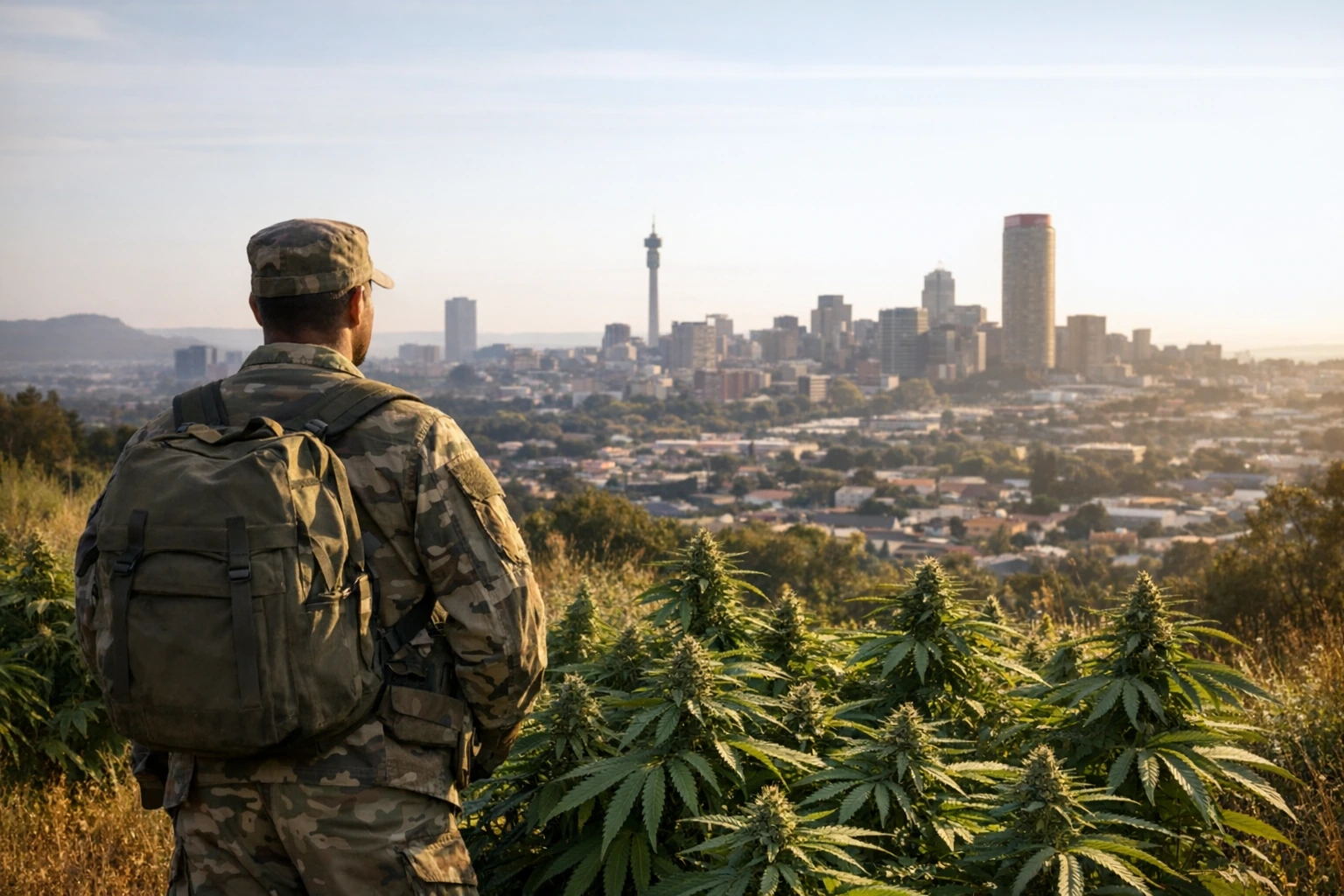
The South African context deserves close attention here. South Africa's cannabis journey has been shaped by the Constitutional Court's landmark 2018 judgment in the Prince case, which decriminalised the private use, possession, and cultivation of cannabis by adults. That ruling was subsequently codified through the Cannabis for Private Purposes Act, signed into law in 2024. The Act explicitly does not address the commercial or medical supply chain, though, and the medical cannabis regulatory framework remains the domain of the South African Health Products Regulatory Authority, known as SAHPRA. Patients seeking medicinal cannabis products must work through SAHPRA's Section 21 authorisation process for unregistered medicines, or access the small number of products that have received full registration. Veterans with post-traumatic stress disorder, chronic pain, or traumatic brain injury, conditions that closely parallel those driving the US reform debate, face exactly the same system as any other patient. There is no dedicated pathway, no veteran-specific clinical support, and no equivalent of the VA's enrolled healthcare population to speak of.
South Africa's Department of Military Veterans has historically struggled with basic healthcare delivery for former soldiers, and cannabis does not feature in any published policy document from that department. The South African Military Health Service, which provides healthcare to current military personnel and operates under the Department of Defence, is similarly silent on cannabis therapeutics. Unlike the US situation, where the barrier is a specific internal VA directive that a targeted amendment can address, the South African gap is structural. There is no centralised veteran healthcare enrolment system through which a cannabis access policy could even be implemented. Former soldiers who want to access cannabis medicinally must approach a private physician, obtain a Section 21 authorisation through SAHPRA, and source products from a licensed manufacturer or importer. In practice, that process costs time and money that many veterans simply do not have.
The global comparison is instructive. Canada, which has among the most developed veteran cannabis access policies in the world, allows Veterans Affairs Canada to reimburse the cost of medical cannabis for qualifying conditions, with spending on veteran cannabis benefits running into tens of millions of dollars annually. Several European Union member states, including Germany and the Netherlands, have incorporated medical cannabis into their statutory health insurance frameworks, though veteran-specific provisions vary across those countries. The US amendment, if enacted, would bring American federal policy closer to what Canada established years ago, even if full federal legalisation remains a distant prospect.
What South African patients, veterans, and cannabis operators should watch in the months ahead is really two things. Domestically, SAHPRA's ongoing work to streamline the Section 21 pathway, and the broader development of a comprehensive medical cannabis regulatory framework, will determine how accessible cannabis-based treatment becomes for all patients, former military personnel included. Internationally, if the US Congress succeeds in passing the VA amendment and finally breaks what has been a frustrating cycle of near-misses, it will add real weight to the argument that state-funded healthcare systems can and should accommodate medical cannabis without waiting for full federal or national legalisation. South African advocacy groups and the nascent local cannabis industry would do well to monitor that precedent now now, and to start engaging the Department of Military Veterans and SAHPRA on whether a dedicated access mechanism for veterans is a reform worth pursuing right here at home.
About the Author