Durban Hits the Streets for Cannabis Reform While South Africa's Legal Limbo Drags On
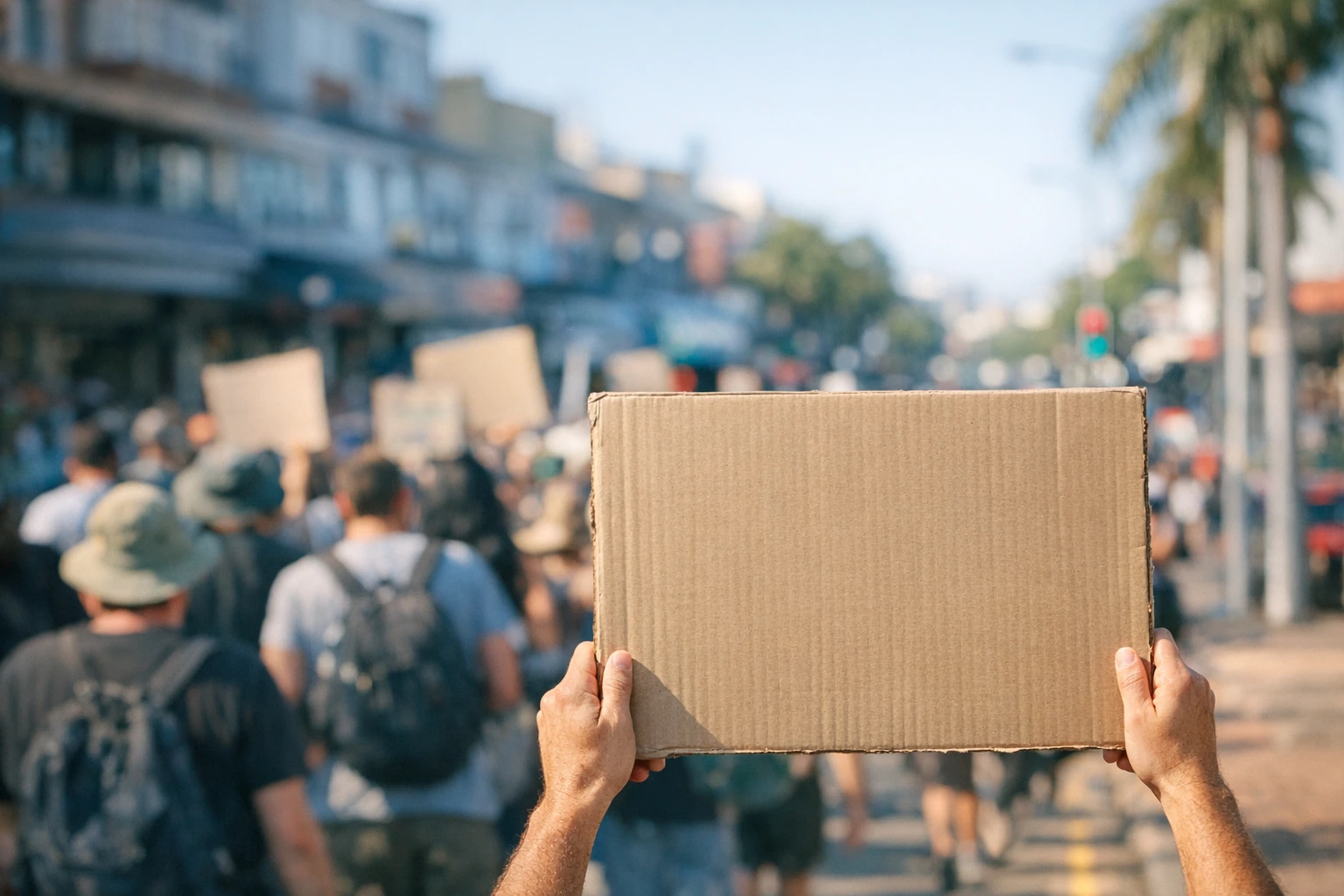
Hundreds of people marched through Durban's Florida Road precinct in early May as part of the annual Global Cannabis March, a worldwide day of action held on the first Saturday of May every year since 1999. The South African turnout, spread across Cape Town, Johannesburg and Durban simultaneously, reflected a growing impatience with the country's fractured cannabis reform process, even as activists celebrated the slow, incremental gains made since the landmark 2018 Constitutional Court ruling. What the march made plain is that the gap between legal promise and lived reality remains wide. The people most affected are determined to close it.
According to Unicorn Riot, which was on the ground in Durban, between 200 and 300 people attended the eThekwini march, a significant jump from the roughly 50 participants who showed up the previous year. The crowd gathered in the Windermere neighbourhood, an area that has quietly become something of a cannabis district, home to a cluster of clubs and retail outlets operating in the grey zone that South African law currently permits. After a delay of nearly two hours waiting for a police escort (a single squad car eventually arrived, which tells you something about official enthusiasm for the occasion), marchers proceeded from Jameson Park down Florida Road, the stretch of Morningside that has long served as a hub of Durban nightlife and tourism. The mood, by multiple accounts, was energetic and broad-based, drawing together consumers, traditional growers, health advocates, and legal professionals.
The backdrop to this year's march is a regulatory environment that remains, eight years after the Constitutional Court's Minister of Justice v Prince ruling, genuinely confusing for ordinary South Africans. That 2018 judgment decriminalised the private use, possession and cultivation of cannabis by adults, a milestone that made South Africa the first country on the African continent to take such a step. It did not, however, legalise commercial sale or distribution for recreational purposes. The Cannabis for Private Purposes Act of 2024 codified much of the Constitutional Court's intent into statute, but as Unicorn Riot reports, the Act has not yet been formally enacted. It remains under review by the Department of Justice and Constitutional Development before it can be submitted to Parliament for final approval. Commercial trade, in the meantime, is explicitly excluded from its scope.
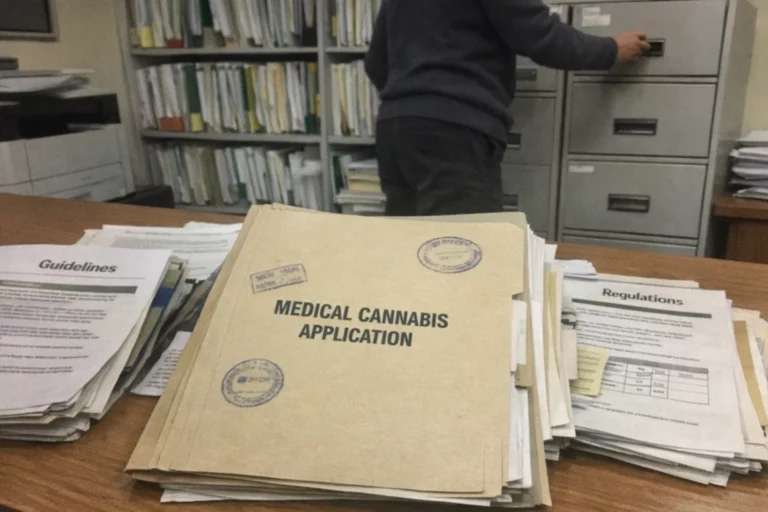
The government's own communications have acknowledged this patchwork quality. Responsibilities for the commercial side of the industry are split across at least three departments: Trade, Industry and Competition; Agriculture, Land Reform and Rural Development; and Health. The South African Health Products Regulatory Authority (SAHPRA) governs medicinal cannabis licensing, a framework that has produced a handful of licensed cultivators and processors but has largely excluded the small-scale and traditional farmers who have grown cannabis, known locally as dagga, for generations, particularly in the Eastern Cape's Pondoland region and parts of KwaZulu-Natal. The financial barriers to SAHPRA licensing alone have been cited repeatedly by advocacy groups as a structural obstacle that entrenches existing inequality within the emerging industry. That situation is not sorted, not by a long way.
The Department of Trade, Industry and Competition released its long-awaited National Cannabis Master Plan in April, and its contents disappointed many in the reform community. According to Unicorn Riot, the document makes no mention of a domestic recreational or medicinal retail framework, focusing exclusively on the cultivation and export of hemp, the non-psychoactive variety of the cannabis plant. For advocates who have spent years pushing for a legal market that includes South African consumers and traditional cultivators, this omission was a telling signal of government priorities. The DTIC has separately indicated that an overarching Cannabis Bill, intended to unify existing legislation including the Cannabis for Private Purposes Act, is in development and targeted for presentation to Parliament by mid-2027. That timeline means a functioning commercial framework is at best two to three years away, assuming the legislative process runs smoothly, which is a considerable assumption given the bill's complexity and the competing interests involved.
The legal uncertainty has real consequences on the ground. Although cannabis-related arrests have declined markedly since 2018, according to reporting by Filter Magazine, police enforcement has not disappeared. In April 2026, a coalition of cannabis advocates and lawyers filed an urgent application in the High Court seeking relief against ongoing raids, the destruction of cannabis plants, and the continued exclusion of traditional growers from the legal economy. The application is a direct challenge to the selective and inconsistent policing that activists say targets small farmers and consumers while leaving the structural questions about commerce unaddressed. The High Court postponed the matter, according to IOL's Weekend Argus, but the case signals that litigation is increasingly being used as a tool where legislative progress has stalled.
At the Durban march, longtime activist and organiser Louis Maxwell addressed the crowd with a pointed reminder about the power of public participation. Speaking directly to the modest scale of civic engagement in formal policy processes, Maxwell noted that out of millions of cannabis users in South Africa, only 2,196 people submitted comments on the proposed Cannabis for Private Purposes Bill, and that 87 per cent of those who did comment opposed the bill as drafted. "I expect every single one of you here today to do your duty and comment publicly," she told the crowd, according to Unicorn Riot. Her call to action extended beyond the march itself to the public hearings where draft bills and departmental policies are still being shaped. It is the kind of message that resonates particularly in a context where the Parliamentary process on cannabis has historically been conducted with limited public scrutiny.
What the 2026 Global Cannabis March in Durban illustrates is that South African civil society is increasingly organised, increasingly litigious, and increasingly unwilling to accept the slow pace of reform as simply the way things are. The surge in march attendance year on year is itself a data point worth noting: the issue is not fading from public consciousness but growing louder. Readers and operators should watch the High Court challenge closely for any interdict that could constrain police conduct towards growers, monitor the DTIC's legislative calendar for movement on the overarching Cannabis Bill, and make sure they participate in the next public comment window when it opens. The distance between where South Africa's law sits today and where it needs to be is still substantial. But the people marching down Florida Road are clearly not going home quietly, and they intend to keep the pressure on until that gap finally closes.
About the Author